


From First Steps to a True Home: Singapore and the Growth of 3×3
From staging 3×3’s first official international competition in 2010 to hosting the FIBA 3×3 World Cup Qualifier this year and the FIBA 3×3 World Cup next year, Singapore’s bond with the sport has grown deeper with time. The local teams are sharper, the crowd is more knowing, and the atmosphere at OCBC Square now feels less like an event stop and more like a genuine home for the game.
By Wong Chin Yi
More than a host
For several years now, Singapore has steadily become one of the homes of 3×3 basketball in Asia. Our unprecedented five-year run of hosting the FIBA 3×3 Asia Cup has given the competition consistency, visibility and a stage that feels worthy of its scale. But that relationship is beginning to look like something larger than a successful hosting arrangement. Singapore now feels like more than a venue – indeed, it is becoming a genuine partner in the growth of 3×3 basketball.
That is what makes the FIBA 3×3 World Cup Qualifier on 11 and 12 April feel especially significant. On the surface, it is a short and unforgiving race for the final World Cup places in Warsaw this year, with six men’s teams and six women’s teams battling for the last three spots in each competition. But it also feels like something more than that. Coming so soon after another exciting Asia Cup in Singapore, and in a year where the city has already staged other major 3×3 events and still has more ahead, this weekend carries the feel of a dress rehearsal for a much bigger stage still to come – the much-anticipated FIBA 3×3 World Cup 2027 in Singapore. When it finally arrives next year, that will certainly be a momentous milestone and a cause for celebration – not just for Singapore, but for the place the city has steadily carved out within the sport.
From first steps to a fuller calendar
That connection, in truth, goes back further than the recent Asia Cup run. When 3×3 made its first official international appearance at the Youth Olympic Games in 2010, it did so in Singapore. At the time, that felt like merely an interesting piece of history. With the benefit of retrospection, it now looks more like the beginning of a longer narrative. Over the past few years, the Asia Cup kept coming back, the audience kept growing, and the local teams kept improving. The trendline from 2010 to today is suddenly much easier to see.
And in 2026, that relationship is being expressed more fully than ever. Singapore’s calendar is not just busy; it is meaningful. The city has already hosted the 3×3.EXE Super Premier Singapore Final in March and the FIBA 3×3 Asia Cup at the start of April. Now comes the World Cup Qualifier for 2026, before the calendar expands again later in the year with the Lion City Challenger in June, the FIBA 3×3 Women’s Series Singapore Stop in August, the Singapore Challenger soon after, and our very own Jumpshot 3×3 Season 3 at the end of that month as a Lite Quest. Of course, that will all be capped off with the FIBA 3×3 World Cup 2027 next June. This spread of events shows that Singapore is no longer simply a convenient stop for one or two marquee events, but a place increasingly embedded within the wider 3×3 ecosystem.
A different kind of Singapore team
Part of this growth can be seen in the way the local teams themselves have changed, and how they carry themselves these days. A few years ago, Singapore’s men and women often entered these events as clear outsiders. They were competitive in patches, but still looked like teams learning the demands of 3×3 against opponents who were much more settled in the format. At times, Singapore’s game could feel almost like pick-up basketball: instinctive, free-flowing, but not always especially strategic. The energy was there, and so was the effort, but not yet a strong sense of control or intention, making the pace feel frantic, without any air of self-assurance.
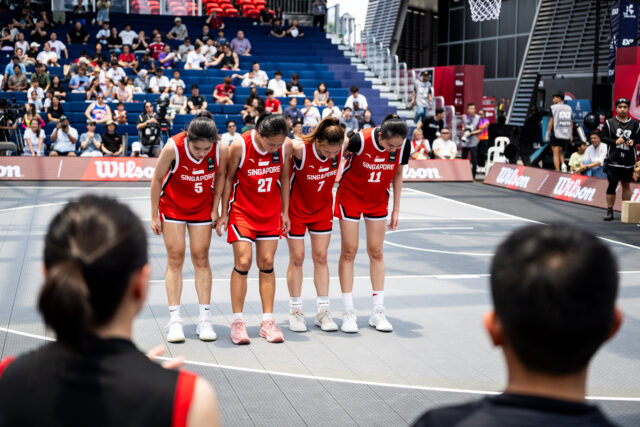
Over the years, that gap has clearly narrowed. Singapore are still not at the point where they can take anything for granted, but that is no longer the point. What matters is that they now look like real competitors, and will no longer be overlooked by potential opponents. There is a better understanding of the pace and geometry of the game, more comfort with its physical demands, and more confidence in moments that used to feel rushed or overwhelming.
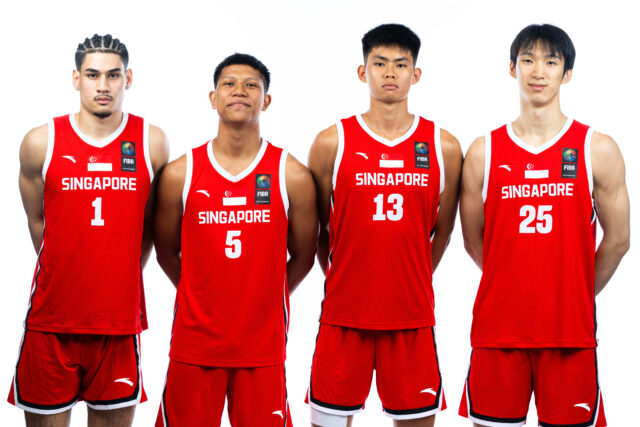
You can see that growth not just in results, but in the texture of the basketball being played. In the early years, Singapore’s 3×3 teams often felt more reactive than deliberate. That is much less true today. There are actions the teams clearly want to run, movement patterns they trust, and reads that arrive more quickly because the players know what the game is asking of them. Possessions feel less improvised and less accidental. The structure is clearer, the spacing more purposeful, and the players have a better sense of where the advantage is meant to come from and how to create it. In a format as quick and punishing as 3×3, that kind of tactical maturity changes everything.
It is visible in smaller details too: the cleaner decisions, the reduced hesitation, the better sense of when to press an advantage and when to keep the ball moving. It is visible, too, in the physical side of the game. Singapore’s teams look stronger, more athletic, and better able to cope with the demands that 3×3 places on the body. It is not just that they know more about the sport now – they look more like they belong in it. Even when our Singapore teams come up short, they increasingly do so as teams seeking to impose themselves rather than simply hang on or survive a gruelling 10-minute beatdown.
A crowd that has grown with the game
The crowd has evolved in much the same way. In the beginning, part of 3×3’s appeal in Singapore was its novelty. The games were fast, the setting was lively, and you did not need to know very much to enjoy yourself. But familiarity has changed the experience. Fans at OCBC Square now come with a much clearer feel for the format and its rhythms. They understand the swing a two-pointer can create. They feel the tension of the 12-second shot clock. They recognise players, styles and match-ups. They know when a game is turning, and why.
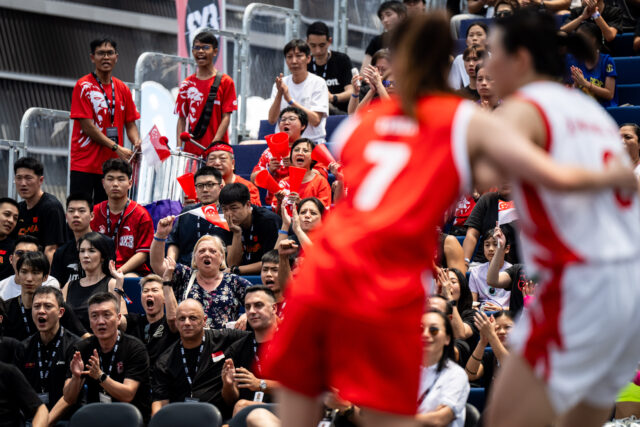
That has changed the atmosphere too. OCBC Square is not just a suitable venue for 3×3 in some abstract sense. It has started to feel like one of the sport’s natural settings. The crowd is close enough to the court for every momentum shift to land properly, and the noise just seems different in that kind of space. Over the years, the bleachers and the fans have become more than a backdrop. They have become part of the event’s texture. Each edition has felt a little more assured, a little more invested, and a little more alive.
What this moment means
That is probably the most interesting thing about this whole stretch. Singapore has not simply hosted 3×3 repeatedly. It has grown with the sport. The history is there. The calendar is fuller. The teams are better. Their understanding of the game is deeper and more instinctively organised than before. The spectators are more fluent in what they are watching. And the atmosphere now has a kind of memory to it.
All of that gives the World Cup Qualifier a significance beyond the immediate stakes. It is not just a road to this year’s World Cup. It is another step in the journey as Singapore gradually becomes one of the cities most closely associated with 3×3 basketball across the globe. For local fans, it will also give us an early taste of the kind of stakes and intensity that will surround the 3×3 World Cup when it arrives here in 2027.
Singapore was there at the start. Now it feels increasingly at home in what the sport has become.
